











Cash Payment Limits 2026: Legal Thresholds and Electronic Benefits
In Italy the cap for cash payments is €5,000 since 1 January 2023: the law bans cash transactions of €5,000 or more, with administrative sanctions for both the payer and the receiver (source: Bank of Italy, L'economia per tutti). For the merchant, electronic payment removes the threshold issue altogether.
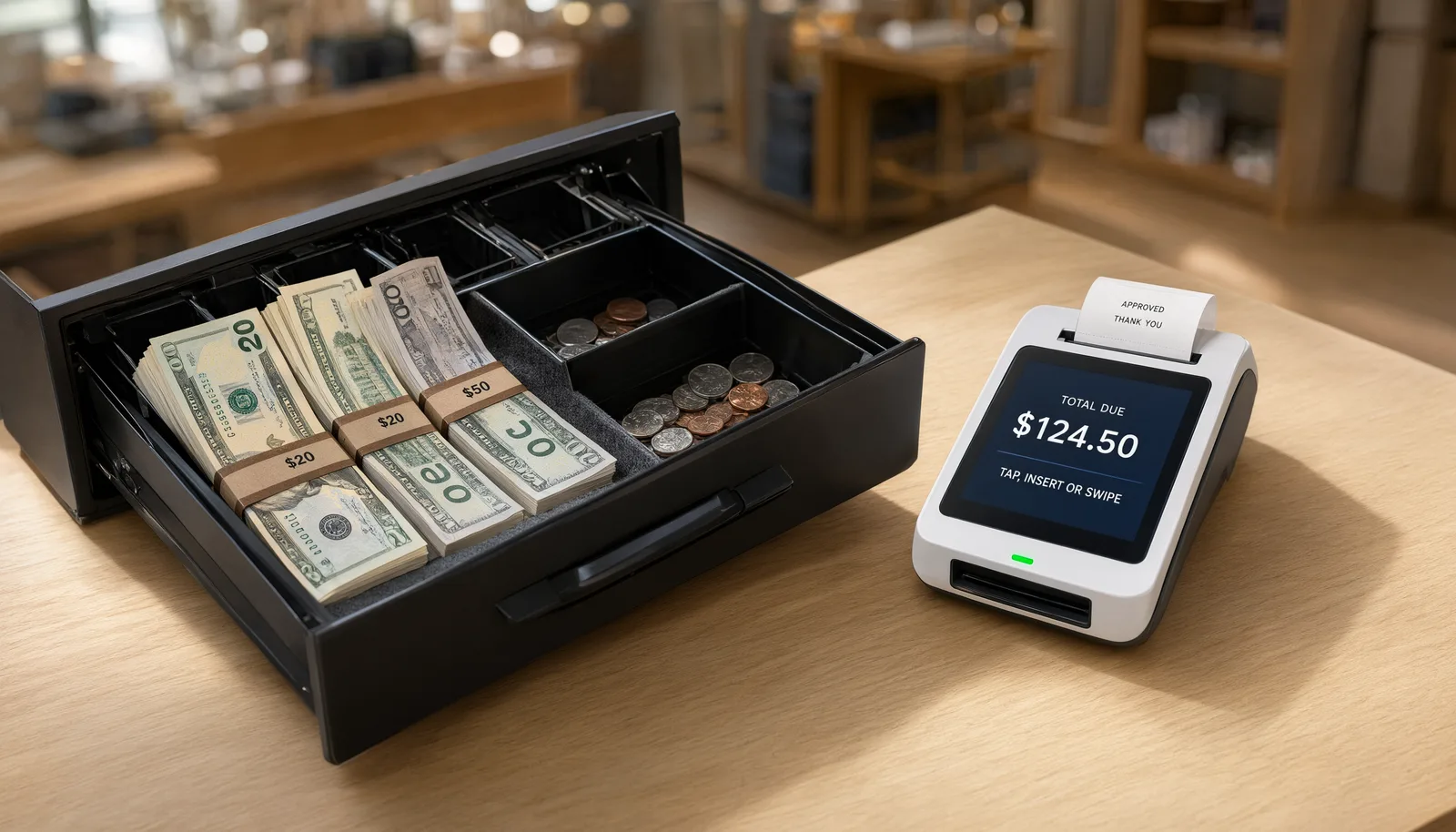
Payment limits: cash vs electronic instruments
| Method | Legal cap | Operational note |
|---|---|---|
| Cash | Up to €4,999 per transaction | A payment of €5,000 or more is banned, with sanctions for both parties (Bank of Italy) |
| Cards and POS | No legal cap | The operational limit depends on the scheme and the terminal |
| Instant transfer (RoxPay PIS) | No legal cap, technical limit €100,000 per A2A transaction | Credit in under 10 seconds, 24/7 |
| Payment link | No legal cap | Traceable and reconcilable, declared IC++ fees |
Sources: Bank of Italy (L'economia per tutti, cash section), DL Aiuti-quater (€5,000 threshold since 1 January 2023), fiscal guides updated to July 2026. The rule applies between individuals and businesses; electronic instruments are not subject to the cash cap.
What the cash limit is in 2026
The threshold for cash payments returned to €5,000 on 1 January 2023 with the Aiuti-quater decree: it had first been lowered to €2,000, then raised again to support business. As fiscal guides updated to July 2026 (Ipsoa) report, in 2026 cash payments remain allowed up to €5,000.
The rule is symmetric: according to the Bank of Italy, the law bans cash payments of €5,000 or more, with administrative sanctions for both the payer and the receiver. There is no equivalent legal cap for electronic instruments: cards, POS and transfers do not fall under the cash limitation.
The threshold applies to transactions between individuals and between individuals and businesses; the Revenue Agency's operational information also governs the communication of transactions of at least €5,000 in the derogation regime.
Why the cap matters for a merchant
For a shop or a professional the threshold defines the maximum collectible in cash per transaction. The practical consequences:
- A cash payment of €4,999 is legal; of €5,000 is banned and exposes both parties to administrative sanctions.
- Transactions above the threshold must necessarily go on electronic instruments: card, POS, transfer. This makes the terminal de facto mandatory for businesses with high receipts (furniture, jewellery, renovations, used cars).
- Electronic tracing protects the merchant: the transaction leaves a verifiable record and the fee accrues the 30% tax credit (art. 22 DL 124/2019, as described in the [POS tax credit guide](/en/resources/pos-tax-credit-2026)).
The POS refusal rule completes the picture: since 30 June 2022 refusing an electronic payment costs €30 plus 4% of the transaction value, as described in the [mandatory POS guide](/en/resources/payment-gateway-for-smes-guide).
Practical benefits of electronic collection
Beyond compliance, electronics bring three measurable advantages:
- No cash risk: no till differences, no shop thefts, no bank deposits to schedule.
- Controlled crediting times: with RoxPay takings arrive on the business account within 48 hours; the instant transfer via open banking credits in under 10 seconds, 24/7.
- Transparent costs: with IC++ pricing (€0.15 + 0.35-0.85%) every fee component is declared, against the opaque percentages of blended rates.
For the merchant accepting high amounts, the instant transfer PIS removes the cash issue entirely: the customer authorizes the payment from their banking app, the transaction is irrevocable and the technical cap is €100,000 per A2A transaction.
How to adapt the shop: the operational path
Collecting above the cash threshold requires an active, well-configured terminal.
Frequently Asked Questions
What is the cash payment limit in Italy in 2026?
€5,000 per transaction, since 1 January 2023 (Aiuti-quater decree) and confirmed by fiscal guides updated in 2026: the law bans cash payments of €5,000 or more, with administrative sanctions for both the payer and the receiver (source: Bank of Italy, L'economia per tutti).
What happens if I pay €5,000 in cash?
The payment is banned by law: administrative sanctions fall on both the payer and the receiver, per the Bank of Italy. The amount must move through a traceable instrument: card, transfer or another electronic instrument, which does not fall under the cash cap.
Is there a legal cap on card or POS payments?
No. The limitation concerns only cash: cards, POS and transfers have no legal cap on the amount. Operational limits (for example the PIN-free contactless threshold, typically €50) are scheme rules, not the cash law.
Do I need a new bank account to collect beyond the threshold?
No. RoxPay is not a bank and does not open bank accounts: electronic takings are credited within 48 hours to the existing business account of your company, with no extra account to manage.
Can I ask the customer to pay electronically above €4,999?
Yes, and it pays off: a cash payment of €5,000 or more is banned for both parties. Refusing an electronic payment, instead, carries a specific sanction of €30 plus 4% of the transaction value since 30 June 2022.
You might also like
High Risk Payment Gateway
Secure payment processing for high-risk industries with multi-acquirer routing and chargeback protection.
Small Business Payment Solutions
Transparent IC++ pricing, free Smart POS terminal, and 24-hour activation for small businesses.
E-commerce Payment Integrations
One-click plugins for WooCommerce, Magento, and PrestaShop with full API access.
Optimize your payments today
Discover the RoxPay POS for your business. No monthly fixed costs, transparent IC++ pricing. Contact us at /en/contact.
✓ No monthly fixed costs · ✓ Activation in 24 hours · ✓ Dedicated technical support